

News Information & Guides
Spray foam insulation in the roof: mortgage problems, lenders and what to do
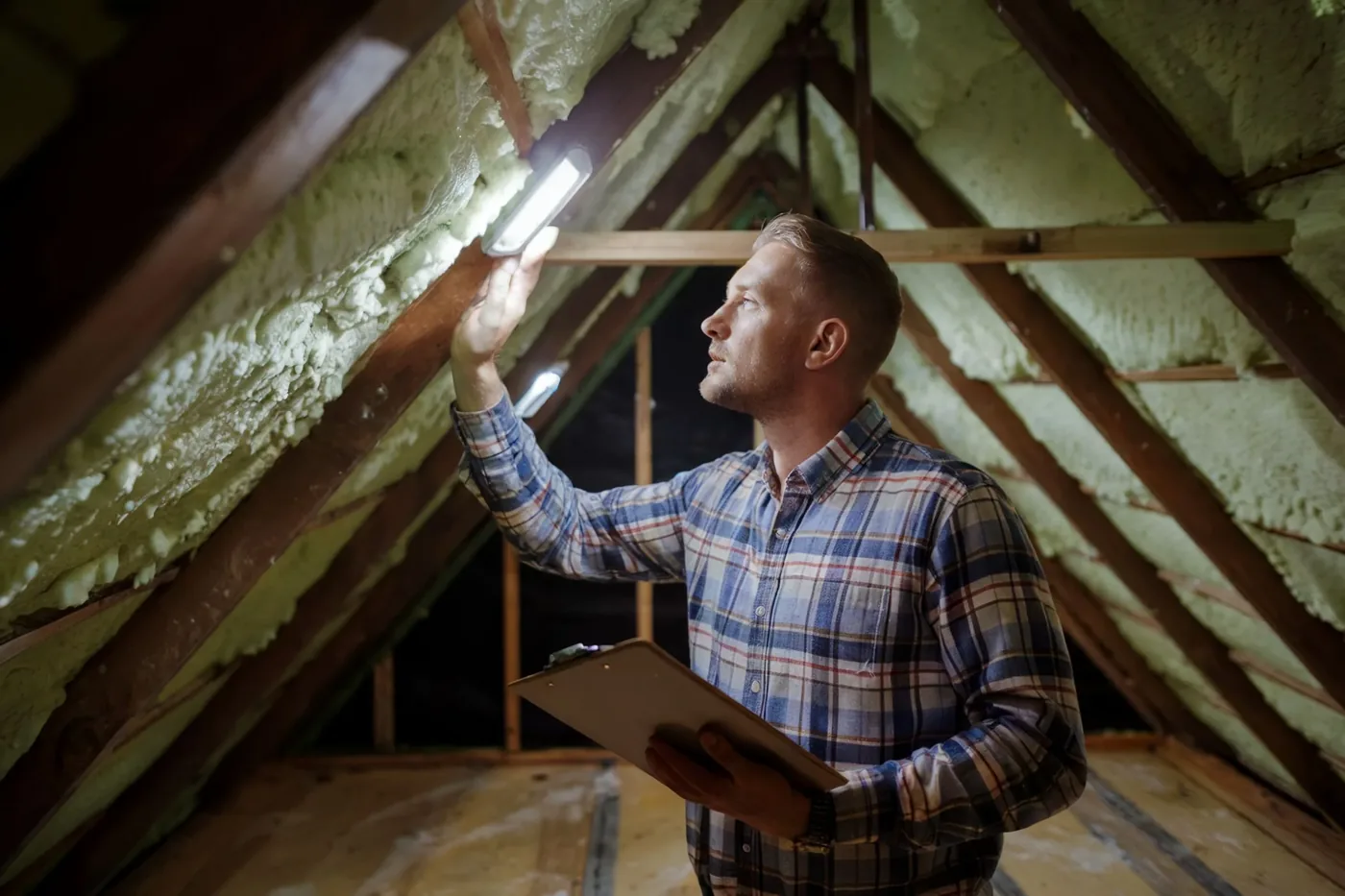
Spray foam insulation in the roof can make a mortgage harder to get, but it doesn't always rule one out. Some lenders decline these homes, many will consider them with an independent spray foam inspection report and the installation paperwork, and some want the foam removed first. Here's why lenders and surveyors worry, what they usually ask for, and what to do if you're buying, selling or remortgaging.
Updated on 17 September 2026 with current surveyor guidance and lender approaches.
Homes affected
~250,000
UK homes estimated to have spray foam in the roof
Lender approach
Varies
From outright refusal to case by case with a specialist report
Key document
Inspection report
An independent survey under the industry inspection protocol
Removal
~£40 per m²
Checkatrade's estimate, before any roof repairs
What is spray foam insulation?
Spray foam is polyurethane insulation sprayed onto the underside of the roof, over the rafters, where it expands and sets. It was widely sold to cut heat loss and draughts. There are two main types, and lenders don't view them the same way.
| Open-cell foam | Closed-cell foam | |
|---|---|---|
| Feel | Soft and spongy | Hard and rigid once set |
| Moisture | Lets some water vapour pass through | Acts as a vapour barrier, so the roof can't "breathe" |
| Original use | Insulation | Often sold to hold slipping tiles or a failing roof together |
| Main risk | Condensation if poorly installed, especially if sprayed straight onto tiles or felt | Trapped moisture, timber rot and extra stress on roof timbers |
| Removal | Easier to strip | Bonds to timbers and tiles, so harder and more costly to remove |
| Lender view | Still a concern, but more often accepted with a good report | Usually treated as higher risk |
Whether you have open-cell spray foam or closed-cell makes a real difference to your mortgage options, so find out which before you apply.
Why mortgage lenders and surveyors worry about spray foam
A lender's security is the property. If the valuer can't be confident the roof is sound, the lender can't be confident of the value.
Why spray foam makes a roof hard to assess
A simplified cross-section of a pitched roof
The main concerns are:
- Hidden timbers. A valuer can't see whether foam-covered rafters are sound. RICS says spray foam can affect a surveyor's opinion of value.
- Condensation and rot. Sealing a roof designed to be ventilated can trap moisture and, over time, cause timber decay.
- Poor installations. The Property Care Association and HomeOwners Alliance told the government in May 2025 that 35% of more than 500 homes inspected had at least one defect caused by spray foam.
- Resale. If future buyers struggle to get a mortgage, the home is harder to sell.
- Fire and insurance. RICS notes polyurethane foam is combustible. It's worth telling your buildings insurer and checking your cover.
The industry inspection standard
In March 2023 the Residential Property Surveyors Association (RPSA) and the Property Care Association (PCA) published the Sprayed Foam Insulation Inspection Protocol, which sets out how a trained surveyor should inspect a foam-covered roof and judge the risk of moisture damage. RICS published a consumer guide the same month.
This is usually the "sprayed foam insulation assessment" lenders mean when they ask for a specialist report. The PCA lists specialist surveyors on its website.
How spray foam affects a mortgage application
For a purchase or a remortgage with a new lender, the process usually runs like this.
- The valuationThe lender's valuer inspects the loft, or asks whether there's spray foam, and records it.
- The lender's first checkSome lenders decline at this point. Others put the valuation on hold pending more information.
- A specialist inspectionYou may be asked for an independent report on the foam and the roof timbers, plus the installer's paperwork.
- The decisionThe lender may accept the report, lend a lower amount, ask for the foam to be removed and the roof checked, or decline.
This can add weeks, so raise it early. If a valuation comes back low, see our guide to what to do when a property is down-valued explains your options.
Which mortgage lenders accept spray foam insulation?
There's no industry-wide rule. Each lender sets its own policy, and broadly they fall into three groups:
| Lender approach | What it usually means |
|---|---|
| Decline | Won't lend where spray foam is in the roof, sometimes unless removal is confirmed |
| Case by case | Will consider it with an independent inspection report, installer paperwork and a roof in good condition |
| Removal required | Will lend once the foam is removed and the roof is inspected or repaired |
To give a sense of scale, when the BBC asked 20 of the UK's largest lenders in November 2024, five said they would not lend where spray foam is in the roof, and others said they usually wouldn't where there was a significant amount. Several big high street lenders said they would look at each case on its merits.
In March 2026 the government met lenders, manufacturers and the PCA about the problem, but it has not offered funding for removal. Policies change, so don't rely on old lists.
We don't name individual lenders here because criteria change often. A whole-of-market broker can check which lenders are currently considering spray foam and on what terms.
If you're buying a house with spray foam insulation
Buyer's checklist
- Ask the seller whether it's open-cell or closed-cell, and when it was installed.
- Ask your conveyancer to request the installation contract, product certificate (such as BBA or Kiwa), condensation risk assessment, photos and any guarantee or warranty.
- Check whether any guarantee is insurance-backed and can pass to you.
- Get an independent spray foam inspection from a surveyor trained in the PCA protocol.
- Tell your broker before you apply, so the application goes to a lender likely to consider it.
- Get removal and repair quotes if the report suggests problems, and use them to negotiate.
- Consider a full building survey rather than relying on the lender's valuation.
Our guide to house surveys explains the options.
Should I buy a house with spray foam insulation?
It depends on the foam, the paperwork and what the inspection finds. These are the situations we see most often.
Open-cell, good paperwork, clean report
Often workable
More lenders will consider it. Factor in that you'll face the same questions when you sell or remortgage, and keep every document.
Closed-cell or no paperwork
Proceed with care
Fewer lenders, more delay and a real chance of a removal condition. Get the inspection and quotes before paying for other costs.
Report finds damp or timber damage
Renegotiate or walk away
Expect removal and roof repairs. Ask for the price to reflect the full cost, or for the seller to do the work before completion.
If you're selling or remortgaging
- Gather the paperwork and get an independent inspection before you market the property or apply, so buyers and lenders see the facts up front.
- If you're remortgaging, a product transfer with your existing lender usually doesn't need a new valuation, which can avoid the issue for now. Switching lender will normally mean a fresh valuation. See our rate switch and remortgage pages.
- Think about removal if the foam is closed-cell, there's no paperwork or a report finds problems. Checkatrade puts removal at around £40 per square metre, roughly £3,200 for the roof of a three-bedroom detached house, but costs rise if timbers, felt or tiles need repair.
- After removal, keep the firm's report and photos as evidence for future lenders.
Further borrowing, secured loans and equity release
Further advances, secured (second charge) loans and equity release all rely on the property's value, so the same questions come up. Equity release lenders have been particularly cautious. Check a lender's position on spray foam before paying any fees.
Grants, cold calls and removal scams
Many homeowners had spray foam fitted after a cold call or doorstep sale, sometimes promoted as grant-funded. It was an approved measure under the Green Homes Grant, which closed in 2021, and has been offered under later schemes such as the Great British Insulation Scheme, which closed in March 2026.
Now there are removal scams too. In August 2026 the PCA warned of fraudsters posing as surveyors and falsely claiming homes were on "databases" of devalued properties, and announced plans for a standards membership for removal firms. Ignore cold calls and check any surveyor's membership with the professional body directly.
If your foam was badly installed, you may be able to claim on the installer's guarantee. Citizens Advice can help if you think you were mis-sold.
Does spray foam improve my EPC?
It can improve the rating, but that won't outweigh a lender's concerns about the roof. See our guide to EPC ratings and mortgages.
How we can help
As with non-standard construction, choosing the right lender first matters. The wrong one can cost you a valuation fee and weeks.
Quick Mortgages is a whole-of-market broker, including specialist lenders, and there are no broker fees for our advice. We'll check current lender criteria before you apply, tell you what paperwork and reports you're likely to need, and handle the application. We're based in Birmingham and help buyers and homeowners across the UK with purchases, remortgages and specialist lending.
Spray foam insulation mortgage FAQs
Can I get a mortgage on a house with spray foam insulation?
Often, yes, but with fewer lenders. Expect to need an independent inspection report and the installation paperwork. Some lenders require removal.
Is open-cell spray foam a problem for mortgages?
It's usually seen as lower risk than closed-cell foam, so more lenders consider it, but most still want a report.
Which mortgage lenders accept spray foam insulation?
Policies vary and change often. Some decline, many assess case by case with a specialist report, and others lend only after removal. A broker can check current criteria for you.
What is a sprayed foam insulation assessment?
An inspection by a trained surveyor, usually under the RPSA/PCA protocol, reporting on the foam, how it was installed and the roof timbers.
Do I have to remove spray foam to sell my house?
No, but a clean inspection report or proof of professional removal can help keep a sale on track.
Can spray foam affect a secured loan or equity release?
Yes. Any lender relying on your home's value may ask about it, and equity release lenders have been among the most cautious.
Sources
- RICS, Spray foam insulation consumer guide, March 2023
- Property Care Association and RPSA, Sprayed Foam Insulation Inspection Protocol, March 2023
- Mortgage Solutions, "PCA creates standards membership for spray foam removal", 27 August 2026
- HomeOwners Alliance, spray foam roof insulation guide and news, 2025–2026 (including Checkatrade removal costs)
- BBC survey of the 20 largest UK lenders, November 2024, as reported by HomeOwners Alliance and Scottish Construction Now
- House of Commons Library, Spray foam insulation and mortgages
Correct on 17 September 2026 and may change.
Disclaimer:
This article is for general guidance purposes only and does not constitute legal, financial, or professional advice. Mortgage products and their terms can vary, and it is important to seek advice from a qualified, regulated professional who can assess your individual circumstances. Please ensure you consider your unique needs before making any financial decisions.
While every effort is made to ensure that the information provided on this blog is accurate and up-to-date, we do not guarantee its completeness or accuracy. The mortgage market can change rapidly, and the information on this blog may become outdated. We recommend verifying any information before acting on it and seeking tailored advice.
THINK CAREFULLY BEFORE SECURING OTHER DEBTS AGAINST YOUR HOME. YOUR HOME OR PROPERTY MAY BE REPOSSESSED IF YOU DO NOT KEEP UP REPAYMENTS ON A MORTGAGE OR ANY OTHER DEBT SECURED ON IT.
Thinking about your own mortgage?
Advice is free, and there is no obligation. Tell us what you are trying to do and we will tell you what is possible.