

News Information & Guides
Rural property mortgages: houses with land, smallholdings and barn conversions
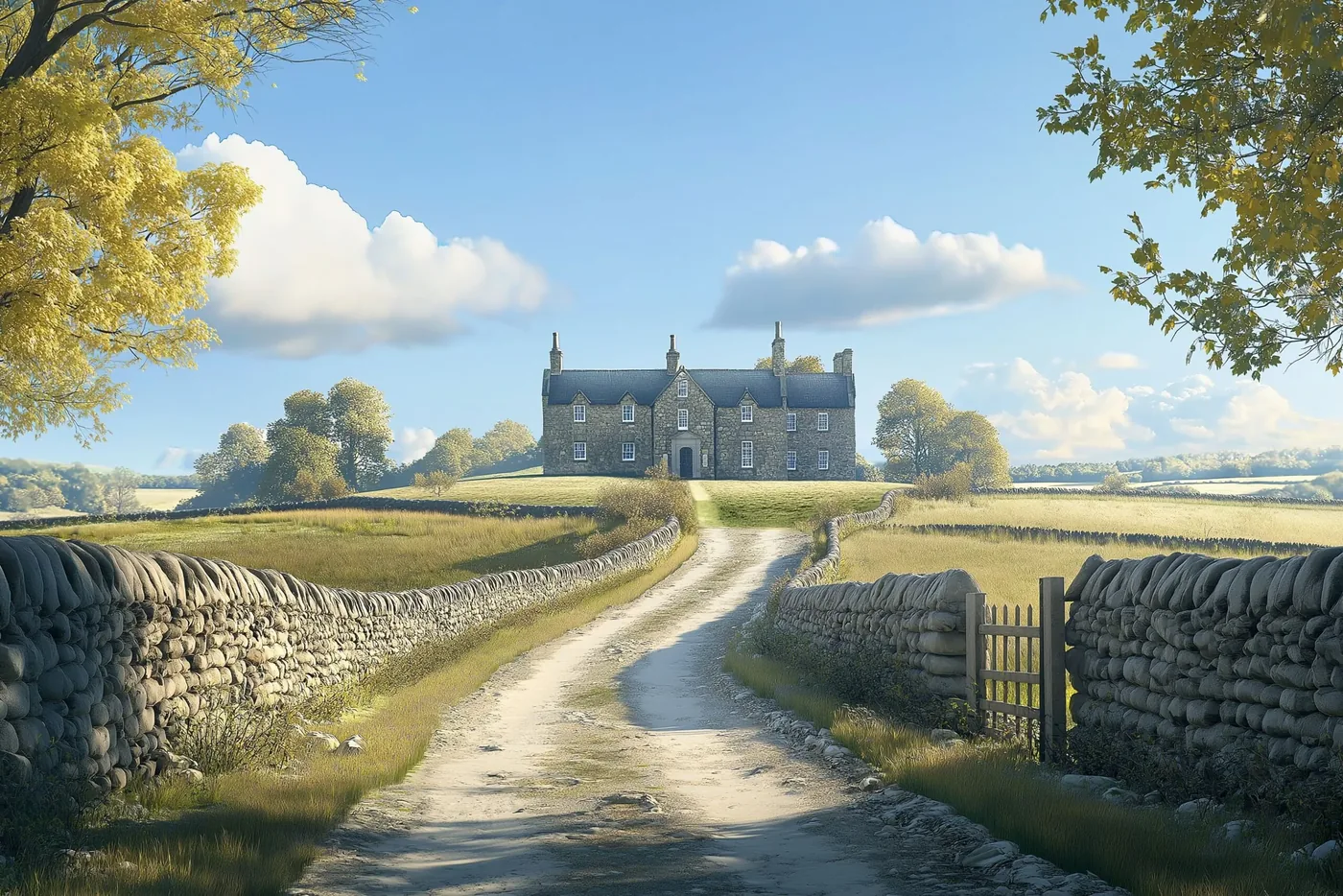
You can usually get a normal residential mortgage on a rural home, including a house with land, a smallholding, a barn conversion or a property with stables. The catch is that fewer lenders will look at it, and many only value the house, its garden and a limited amount of land. Once land or buildings are used to run a business, you may need a commercial or agricultural loan instead.
Updated on 17 September 2026 with current drainage, planning and flood insurance rules.
Land
Limits vary
Some lenders cap the acreage they accept; others value only the house and garden
Residential or not?
40% test
A loan is only a regulated mortgage if at least 40% of the land is used as or with a home
Septic tanks
Check the outlet
In England, a tank draining straight into a stream or ditch must be upgraded
Flood cover
Pre-2009 homes
Flood Re helps keep insurance available for eligible homes built before 1 January 2009
Why are rural properties harder to mortgage?
Lenders want security they could sell quickly at a predictable price. Rural homes raise more questions than a suburban semi.
- Land and outbuildings are hard to value and may appeal to fewer buyers.
- Business use, such as livestock, livery or holiday lets, can make the property partly commercial.
- Private services like septic tanks, borehole water and oil heating bring extra checks.
- Construction and planning: thatch, listed status, conversions and occupancy conditions all narrow the lender choice.
- Location: remote homes can take longer to sell, and some lenders avoid certain areas.
How much land will a mortgage lender accept?
There's no industry-wide rule. Some high street lenders set an acreage limit, sometimes just a couple of acres, while others will consider more on a case-by-case basis. Rural building societies and specialist lenders tend to be the most flexible.
Even when a lender accepts the land, its valuer may put most of the value on the house and garden and give the fields little or nothing. If you're paying a premium for paddocks or woodland, that can leave a gap between the price and the valuation that your deposit has to cover.
How a residential lender may view a house with land
Simplified: every lender and valuer takes its own approach
Rural property types and how lenders see them
A general guide only. Criteria differ a lot between lenders and change often.
| Property | What lenders usually ask about | Typical route |
|---|---|---|
| House with land | Total acreage, how the land is used, whether any is let to a farmer or grazier | Residential mortgage if the land is for private use and within limits; specialist or rural lender for larger plots |
| Smallholding | Livestock or crops, whether produce is sold, any agricultural tie, outbuildings | Residential lenders for hobby use; specialist, commercial or agricultural lenders if it's a business |
| Equestrian property | Stables, menage and field shelters; private use or commercial livery, riding school or breeding | Residential for your own horses; commercial finance if horses are kept for income |
| Barn conversion | Planning consent, building regulations sign-off, a warranty or professional certificate if recently converted | Many mainstream lenders once complete and signed off; self-build or bridging finance during the works |
| Listed or thatched cottage | Condition, roof age, listed building consent for past work, insurance availability | Many residential lenders, subject to valuation and buildings insurance |
| Farmhouse with outbuildings | Whether it's sold with the farm, agricultural tie, business use of yards and barns | Residential if sold off as a home; agricultural or commercial if part of a working farm |
| Home with holiday let annex | Whether the annex has separate title or access, and whether it's let | Some residential lenders accept it; letting income may not count for affordability |
Two related guides go deeper on specific issues: agricultural ties, covenants and overage clauses and non-standard construction mortgages, which covers thatch and cob. If the annex will be let to holidaymakers, see our holiday home mortgages guide.
Residential mortgage or agricultural and commercial finance?
The deciding question is usually how the property is used, not where it is.
Residential mortgage
A home, with land for your own use
You live there, and any land, stables or outbuildings are for private enjoyment. Rates and terms are usually in line with other residential mortgages, and the loan is regulated by the FCA.
Agricultural or commercial loan
A farm or rural business with a house
Lenders look at the business accounts and the land as well as your income. Terms are often more flexible, but pricing and fees differ. Read what a commercial mortgage is.
Under FCA rules, a loan can only be a regulated mortgage contract if at least 40% of the land securing it is used as, or in connection with, a home. A farmhouse on 100 acres of working farmland can fail that test.
Agricultural mortgages for farming businesses, and most commercial mortgages, are not regulated by the Financial Conduct Authority, so you won't have the same protections as with a regulated residential mortgage.
Private drainage, water, heating and access
Many rural homes aren't on mains services. Lenders, valuers and insurers will ask about each one.
| Service | What to check |
|---|---|
| Septic tank or treatment plant | Where it discharges, its age and service records. In England, a septic tank draining directly to a stream, river or ditch must be replaced or upgraded, usually within about 12 months. |
| Private water supply | Borehole, well or spring; water quality tests; whether it's shared. The council must risk-assess shared or commercial supplies, including holiday lets. |
| Oil or LPG heating | Tank age, condition and position; boiler servicing. Off-gas heating often lowers the EPC rating. |
| Broadband and mobile signal | Actual speeds, especially if you work from home. Homes without a decent connection can request one under the broadband Universal Service Obligation, subject to a cost threshold. |
| Access and rights of way | Whether the lane is private, who maintains it, and any public footpaths or bridleways across the land. |
| Flood risk | Flood history, official flood risk maps and the cost of buildings insurance. |
Sellers in England must tell buyers in writing about a small sewage system, including its location, any changes and maintenance records. The general binding rules for these systems apply in England; Wales, Scotland and Northern Ireland have their own regimes. For heating and energy ratings, see EPC ratings and mortgages.
Barn conversion mortgages
A finished, signed-off barn conversion is usually treated much like any other house, though some lenders are wary of open-plan layouts, large glazed areas or conversions that still sit inside a working farmyard.
- Planning permissionFull planning consent, or prior approval under the Class Q permitted development right in England. Since 21 May 2024, Class Q allows up to 10 homes and 1,000 square metres in total, with each home limited to 150 square metres.
- Building regulationsA completion certificate from building control. Lenders and buyers' solicitors will ask for it.
- Warranty or certificateFor recent conversions, many lenders want a structural warranty or a professional consultant's certificate from the architect or surveyor who oversaw the work.
- Funding the worksA standard mortgage won't usually fund an unconverted barn. Buyers often use savings, bridging finance or a self-build style mortgage released in stages.
Listed buildings and thatched cottages
Most listed and thatched homes are mortgageable. The questions are about condition and paperwork. Works that affect the character of a listed building need listed building consent, and doing them without it is a criminal offence. Past unauthorised work can become the new owner's problem, so ask your solicitor to check.
For thatch, insurance is often the bigger hurdle. Premiums tend to be higher, and some insurers ask about the thatch's age, chimneys, wood burners and spark arresters. Get quotes before you exchange contracts.
Surveys and insurance for rural homes
The lender's valuation won't tell you whether the septic tank works or the thatch needs replacing. For older or unusual rural homes, an RICS Home Survey Level 3 is often worth it, plus drainage or water reports where needed. Read our guide to house surveys and specialist checks.
Lenders need buildings insurance in place from exchange or completion. If the home is in a flood risk area, check whether it qualifies for the Flood Re scheme, which covers eligible homes built before 1 January 2009 and is due to end in 2039. If the valuation comes in low, see what to do when a property is down-valued.
Questions to ask before you offer
- Land
- How many acres, and is any let, grazed or subject to overage?
- Use
- Is anything run as a business, such as livery, lets or sales of produce?
- Planning
- Is there an agricultural tie, and are conversions and outbuildings approved and signed off?
- Drainage
- Septic tank or treatment plant, where does it discharge, and when was it last emptied?
- Water and heating
- Mains or private water, and what fuels the heating?
- Access
- Who owns and maintains the lane, and are there rights of way?
- Insurance
- Can you get buildings cover for thatch or flood risk at a price you can afford?
Rural property mortgage FAQs
Can I get a mortgage on a house with land?
Usually, yes. Many lenders accept a house with a few acres for private use. Larger plots or land used commercially narrow the choice to specialist, rural or commercial lenders.
Can you get a mortgage on a smallholding?
Yes, if it's mainly your home and the land is a hobby rather than a business. If you sell produce or rely on the land for income, lenders may treat it as agricultural or commercial.
Do mortgage lenders accept septic tanks?
Most do, as long as the system is compliant and working. In England, a septic tank that discharges directly into a watercourse must be upgraded, so expect questions from your solicitor and the lender.
Can I get a mortgage on an equestrian property?
Yes, if the stables and menage are for your own horses. Commercial livery yards, riding schools and breeding businesses generally need commercial finance.
Is it harder to get a mortgage on a barn conversion?
Not usually once it's finished and signed off. You'll need planning consent, a building regulations completion certificate and, for recent work, a warranty or professional certificate.
Are agricultural mortgages regulated?
Loans to farming businesses usually aren't FCA-regulated. A mortgage on a home where at least 40% of the land is used as or with the dwelling can be.
How Quick Mortgages can help
With rural homes, the hard part is finding a lender that accepts the land, the services and the way you'll use the property, before you pay for surveys and legal work.
We're a whole-of-market broker with a panel of 110+ lenders, including building societies, specialist lenders and commercial and bridging lenders. We check criteria up front and charge no broker fees. We're based in Birmingham and help buyers across the UK.
Sources
- FCA Handbook, PERG 4.4: What is a regulated mortgage contract? (40% dwelling test)
- GOV.UK, General binding rules: small sewage discharge to a surface water (updated 2 October 2023) and to the ground (updated 23 July 2026)
- The Private Water Supplies (England) Regulations 2016 (legislation.gov.uk)
- The Town and Country Planning (General Permitted Development etc.) (England) (Amendment) Order 2024, Class Q changes from 21 May 2024
- Planning (Listed Buildings and Conservation Areas) Act 1990 (legislation.gov.uk)
- Flood Re, eligibility criteria and transition plan
- House of Commons Library, The Universal Service Obligation for broadband
Correct on 17 September 2026 and may change.
Disclaimer:
This article is for general guidance purposes only and does not constitute legal, financial, or professional advice. Mortgage products and their terms can vary, and it is important to seek advice from a qualified, regulated professional who can assess your individual circumstances. Please ensure you consider your unique needs before making any financial decisions.
While every effort is made to ensure that the information provided on this blog is accurate and up-to-date, we do not guarantee its completeness or accuracy. The mortgage market can change rapidly, and the information on this blog may become outdated. We recommend verifying any information before acting on it and seeking tailored advice.
THINK CAREFULLY BEFORE SECURING OTHER DEBTS AGAINST YOUR HOME. YOUR HOME OR PROPERTY MAY BE REPOSSESSED IF YOU DO NOT KEEP UP REPAYMENTS ON A MORTGAGE OR ANY OTHER DEBT SECURED ON IT.
Thinking about your own mortgage?
Advice is free, and there is no obligation. Tell us what you are trying to do and we will tell you what is possible.