

News Information & Guides
Agricultural ties, covenants and overage clauses: mortgages and what to check
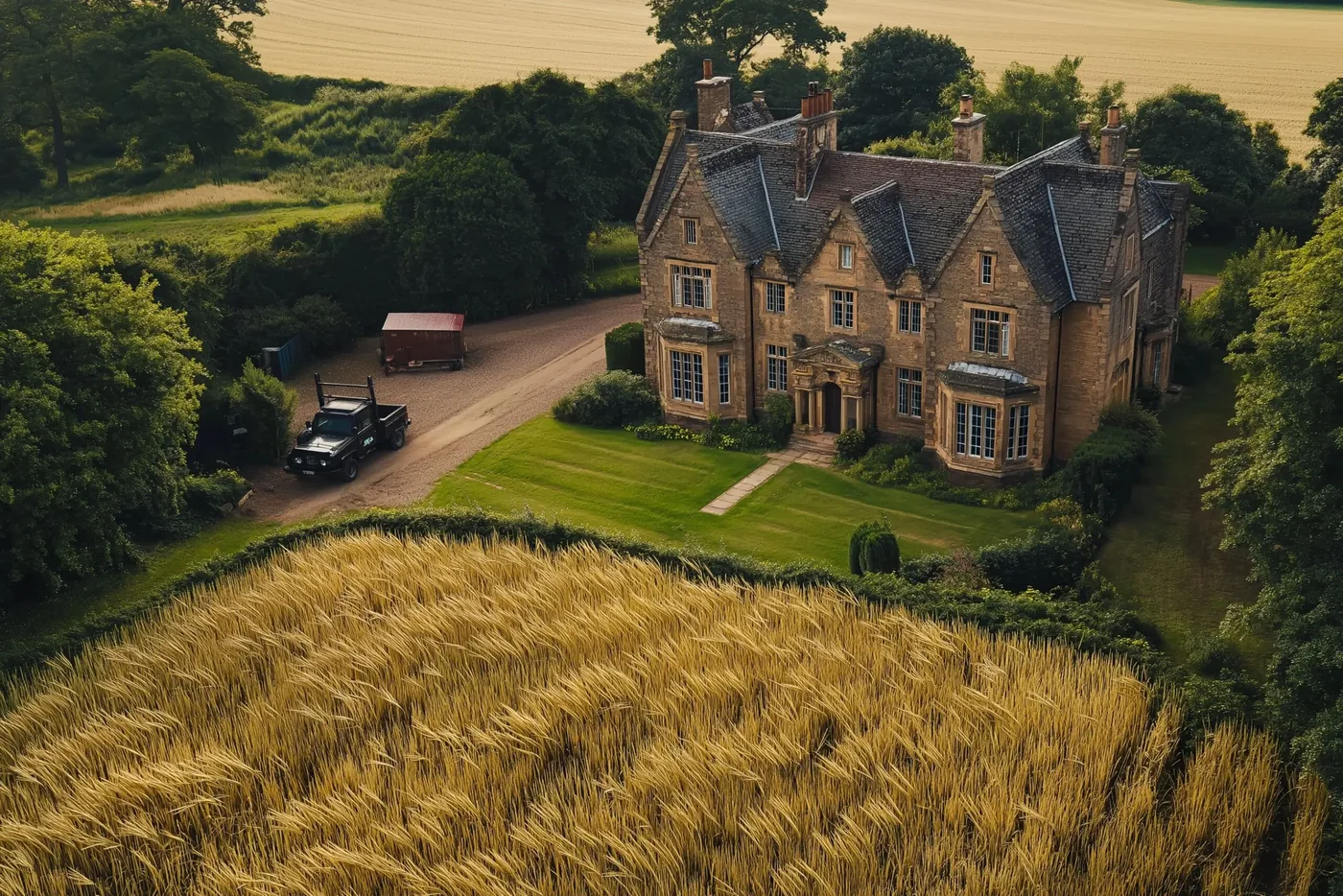
An agricultural tie, formally an agricultural occupancy condition (AOC), is a planning condition that limits who can live in a home, usually to people working, or who last worked, in farming or forestry. You can get a mortgage on a property with an agricultural tie, but fewer lenders will consider it, and usually only if you meet the condition. Restrictive covenants and overage clauses are different restrictions, and each affects value, lending and your plans in its own way.
Updated on 17 September 2026 with current planning enforcement rules and lender practice.
Who can live there
Farm and forestry workers
Plus, under the usual wording, their widow or widower and resident dependants
Effect on value
Often lower
Councils and planning inspectors often treat about 30% below open market value as a realistic price for a tied home
Mortgages
Fewer lenders
Mainly rural, building society and specialist lenders, valued on the restricted basis
Lifting a tie
12 months
The marketing period councils commonly expect before they will consider removing the condition
What is an agricultural tie?
An agricultural tie is a condition attached to the planning permission for a house, under the Town and Country Planning Act 1990. It's also called an agricultural occupancy condition, an agricultural occupancy restriction, an "ag tie" or an agricultural habitation clause. Some ties are set out in a section 106 agreement instead of, or as well as, a planning condition.
Ties exist because councils normally refuse new homes in open countryside. They make an exception where a rural worker genuinely needs to live on site, and the tie keeps the home available for that purpose in future.
Who can live in a house with an agricultural tie?
The exact wording is in the planning decision notice, so always read it. Many councils use a model condition from government guidance (Circular 11/95), which limits occupation to:
- a person solely or mainly working in agriculture or forestry in the locality
- a person who last worked in agriculture or forestry locally, including someone now retired
- the widow or widower of such a person
- any resident dependants
Newer conditions may be wider, covering other rural businesses such as equestrian enterprises, or narrower, tying the house to a named farm. "Locality" is not defined and is read case by case. Owning the house doesn't make you eligible; the person living there must meet the condition.
Agricultural ties, restrictive covenants and overage clauses compared
All three are often lumped together, but they come from different places and are dealt with in different ways.
| Agricultural tie (AOC) | Restrictive covenant | Overage clause | |
|---|---|---|---|
| What it is | Planning condition limiting who can live there | Legal restriction in the title on how the land is used | Promise to pay the seller a share of future uplift in value |
| Where you find it | Planning permission or section 106 agreement | Title register and deeds | Sale contract, transfer or a legal charge |
| Who enforces it | The local planning authority | Whoever benefits, often a neighbour, developer or former owner | The seller or their successors |
| How to remove or change it | Section 73 application, or a lawful use certificate after 10 years' breach | Agreement with the beneficiary, or an Upper Tribunal application | Negotiate a release or wait until it expires |
| Mortgage impact | Significant: fewer lenders, lower valuation | Usually small, unless it affects use or has been breached | Depends on terms; a legal charge needs the lender's agreement |
How an agricultural tie affects value
Because only a limited group of people can live in a tied home, it's usually worth less than the same house without the tie. There's no fixed discount. When councils consider removing a tie, many expect it to have been marketed at about 30% below open market value, and planning appeal decisions have generally backed a figure around that level. Location, demand from local farming families and the size of the house all play a part.
A lower price can make a tied home good value if you qualify. The trade-off comes when you sell: you'll face the same small pool of buyers and lenders.
Getting a mortgage with an agricultural tie
Many high street lenders won't lend on tied properties at all. Those that do are mainly building societies, rural and agricultural lenders and some specialists. Expect these differences:
- Valuation on the restricted basis. The valuer reports what the house is worth with the tie in place, and the lender lends against that lower figure.
- Proof you comply. Most lenders want the occupier to meet the condition. Few will lend if the tie is being breached, unless a lawful use certificate is in place.
- Deposit and loan size. Some lenders cap the loan to value for tied homes, so a larger deposit widens your choice.
- Farm income. If you're self-employed in farming, lenders will look at your accounts, and some want a longer trading record.
What lenders and solicitors usually ask for
- The planning decision notice and the exact wording of the condition
- Any section 106 agreement, with its terms on occupation and sale
- Evidence the occupier qualifies, such as an employer letter, farm accounts or proof of past agricultural work
- Whether the house is linked to farmland or buildings that must be sold together
- Any lawful use certificate, or planning history if the tie has been varied
For more on farmhouses, smallholdings and rural lending, read our guide to rural and agricultural mortgages. If the house is also of unusual construction, see non-standard construction mortgages.
Can I buy a house with an agricultural tie?
Yes, if you, or whoever will live there, meet the condition. Before you offer, check:
- Do you meet the exact wording, including "in the locality"?
- Will you still comply if your job changes or you retire?
- Is a lender willing to lend, on a valuation that reflects the tie?
- Is the seller complying now? A current breach can put lenders off.
- Could you sell in future to a qualifying buyer, and at what price?
If you don't qualify, don't buy expecting to lift the tie later. It isn't guaranteed, and living there in breach risks enforcement action.
How to remove or lift an agricultural tie
There are two main routes in England and Wales.
1. A section 73 application
You apply to the council to remove or vary the condition. You'll need to show there's no longer a need for the home among local agricultural or rural workers. That usually means:
- Market the propertyFor at least 12 months (some councils accept less, others want longer) through agents and the farming press.
- Price it realisticallyAt a figure that reflects the tie, often about 30% below open market value.
- Record the interestKeep a log of enquiries, viewings and offers, and why each didn't proceed.
- ApplySubmit the evidence, often with an independent surveyor's report. If the council refuses, you can appeal.
If the tie is in a section 106 agreement, you'll also need an application to modify or discharge the obligation.
2. A certificate of lawfulness after 10 years' breach
If a house has been lived in by people who don't qualify for 10 years in a row, you can apply for a Certificate of Lawfulness of Existing Use or Development (CLEUD). You'll need clear evidence, and long gaps when the house was empty or occupied by a qualifying person can break the run.
A 10-year limit has applied to breaches of planning conditions for many years. Since 25 April 2024, the Levelling-up and Regeneration Act 2023 has also made 10 years the limit for all other breaches of planning control in England, ending the old four-year rule for building works and changes of use to a house. The rules are different in Scotland and Northern Ireland.
A certificate protects the use from enforcement, but lenders vary in how they treat it. Check before relying on one to get a mortgage.
What is a restrictive covenant?
A restrictive covenant is a legal promise, recorded in the title, not to do something with the land. It usually binds later owners. Common examples include:
- Building restrictions, such as no extensions, extra homes or outbuildings without consent
- Use restrictions, such as no business use or no more than one house
- Appearance rules, such as keeping fences, roofing or boundaries a certain way
Breaching a covenant can lead to an injunction, an order to undo the work, or damages. Your solicitor will check the title and explain what applies. Most covenants don't worry lenders, but a breach, or one that stops the property being used as a home, can.
Dealing with a restrictive covenant
- Ask for consent or a release from whoever benefits, if they can be identified.
- Restrictive covenant indemnity insurance can cover the risk of an old covenant being enforced, often where it has already been breached. It usually isn't available if you've contacted the person who benefits, so speak to your solicitor first.
- Apply to the Upper Tribunal (Lands Chamber) under section 84 of the Law of Property Act 1925 to discharge or modify it, for example because it's obsolete or blocks a reasonable use. This can be slow and costly, and compensation may be awarded to those who benefit.
Overage clauses on agricultural land
An overage clause (also called clawback) means the buyer pays the seller a share of any increase in value if a trigger event happens. They're common on farmland, paddocks, barns and plots with development potential.
How it's triggered
Usually planning permission or a sale
Typical triggers are getting planning permission for new homes or another use, starting development, or selling the land with planning.
How it's calculated
A share of the uplift
Usually a percentage of the difference between the value with and without the permission, less agreed costs. The percentage and deductions are negotiated.
Most overage clauses last for a set period, often 10, 20 years or more. They may be protected by a restriction on the title or a legal charge, which can affect a later sale or remortgage.
Questions to ask about an overage clause
- What exactly triggers payment, and does a home extension or a single new house count?
- What percentage is payable, and how is the uplift valued?
- Which costs can be deducted first?
- When does it expire?
- How is it secured, and will your lender accept that?
How a broker helps
With a tied or restricted property, the hard part is finding a lender that accepts the restriction, values it fairly and is comfortable with your income. Criteria differ a lot and change often.
At Quick Mortgages we search the whole of the market, including building societies and specialist lenders, and there are no broker fees for our advice. We can check whether lenders will consider the property before you pay for surveys and legal work. We're based in Birmingham and help buyers across the UK.
Agricultural tie FAQs
What is an agricultural tie?
A planning condition that limits who can live in a home, usually to people working, or who last worked, in agriculture or forestry locally, plus their widows or widowers and dependants.
Can I get a mortgage with an agricultural tie?
Yes, from a smaller group of lenders. Most will want you to meet the condition, and they'll lend against a valuation that reflects the tie.
Can I buy a house with an agricultural tie if I don't work in farming?
Only if you qualify some other way, such as having retired from farming locally or being a dependant. Otherwise you'd be in breach, and most lenders won't lend.
How much does an agricultural tie reduce value?
It varies. About 30% below open market value is often used as a guide when councils assess marketing, but local demand makes a big difference.
Can an agricultural tie be removed?
Sometimes, through a section 73 application backed by marketing evidence, or with a lawful use certificate after 10 continuous years of non-qualifying occupation.
Is an agricultural tie the same as a restrictive covenant?
No. A tie is a planning condition enforced by the council. A restrictive covenant is a private legal restriction in the title, enforced by whoever benefits from it.
Looking at a property with a tie or restriction?
Get the planning notice and title documents early, check you meet any occupancy condition, and find out which lenders will consider the property before you commit to costs.
We can help you find a lender, with no broker fees.
Sources
- Town and Country Planning Act 1990, sections 73, 106A, 171B and 191 (legislation.gov.uk)
- Levelling-up and Regeneration Act 2023, section 115, and SI 2024/452 commencement regulations (legislation.gov.uk)
- Department of the Environment, Circular 11/95, model condition 45 on agricultural occupancy
- CLA, Occupancy conditions for agricultural and rural workers: how do they work? (updated February 2025)
- Ashfords, Removing agricultural occupancy conditions
- South Holland District Council, Agricultural workers' dwellings and occupancy conditions policy guidance note
- GOV.UK, Upper Tribunal (Lands Chamber) guide for applications to discharge or modify restrictive covenants (T608); Law of Property Act 1925, section 84
Correct on 17 September 2026 and may change.
Disclaimer:
This article is for general guidance purposes only and does not constitute legal, financial, or professional advice. Mortgage products and their terms can vary, and it is important to seek advice from a qualified, regulated professional who can assess your individual circumstances. Please ensure you consider your unique needs before making any financial decisions.
While every effort is made to ensure that the information provided on this blog is accurate and up-to-date, we do not guarantee its completeness or accuracy. The mortgage market can change rapidly, and the information on this blog may become outdated. We recommend verifying any information before acting on it and seeking tailored advice.
THINK CAREFULLY BEFORE SECURING OTHER DEBTS AGAINST YOUR HOME. YOUR HOME OR PROPERTY MAY BE REPOSSESSED IF YOU DO NOT KEEP UP REPAYMENTS ON A MORTGAGE OR ANY OTHER DEBT SECURED ON IT.
Thinking about your own mortgage?
Advice is free, and there is no obligation. Tell us what you are trying to do and we will tell you what is possible.