

News Information & Guides
Flying freehold: what it means, mortgages and whether to buy
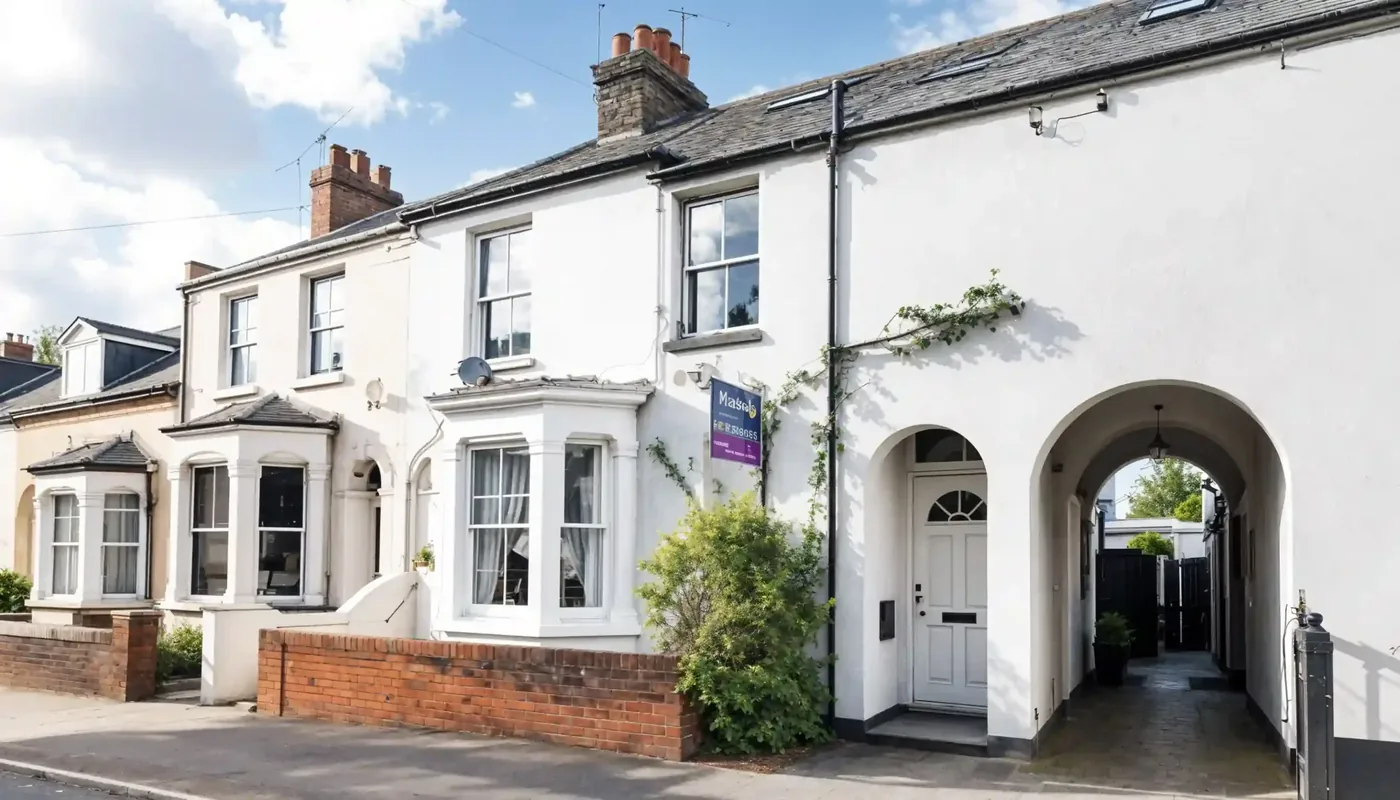
A flying freehold is part of a freehold home that sits above (or sometimes below) land or a building owned by someone else, such as a bedroom built over a neighbour's passageway. You own that part outright, but it depends on your neighbour's property for support, and in England and Wales you usually can't make them repair it. Many lenders still offer mortgages on flying freeholds, often with conditions.
This guide covers England and Wales unless stated. Scotland has its own rules, explained further down.
Can you get a mortgage?
Often, yes
Many lenders accept a small flying freehold. Fewer accept a large one
How much is affected
Size matters
Some lenders cap the share of the home that can be flying freehold; others judge case by case
The main legal gap
Repairs
Your neighbour usually can't be forced to maintain the structure holding up your room
The usual fix
Indemnity insurance
A one-off policy many lenders accept, sometimes alongside a deed with the neighbour
What is a flying freehold?
A freehold normally means you own the building and the ground beneath it. With a flying freehold, part of your home "flies" over land or a structure that belongs to a neighbour, so you don't own what lies underneath it.
The opposite arrangement, where part of your home extends under a neighbour's property (a cellar beneath next door's front room, say), is usually called a creeping freehold. Lenders and solicitors treat the two in much the same way.
You may also see the term "floating freehold". It has no separate legal meaning and is almost always used loosely to mean a flying freehold.
The classic flying freehold
A bedroom built over a neighbour's passageway, seen from the street
Common examples of flying freeholds
They're most common in older homes that have been altered, extended or split up over the years.
A room over a shared passage or archway
The textbook case, common in Victorian terraces
A bedroom stretches over a covered alley between two terraced houses, and the passage below belongs to next door or is shared.
A room over a neighbour's garage or outbuilding
Often the result of an old extension
Part of your first floor rests on a garage, store or outhouse that was sold off with the house next door.
Overhanging bays, balconies or eaves
Usually small, but still worth checking
A bay window, balcony or roof section projects over a neighbour's land. Many cause few issues, but the title plan should still be checked.
Converted and divided buildings
Cottages, farm buildings and split houses
When one building becomes two homes, a staircase or room can end up over the other half. Freehold flats and maisonettes are an extreme version, and many lenders decline them altogether.
Why flying freeholds can be a problem
The issue is legal rather than structural: who must look after what holds your home up, and whether you can get in to repair your own part.
- Repairs to the structure below. In England and Wales, a promise to do something, like keeping a wall or roof in repair (a "positive covenant"), generally does not bind later owners of the land. The House of Lords confirmed this in Rhone v Stephens (1994). So an old deed saying next door must maintain the archway may not bind a new owner.
- Support and protection. Where a building was once in single ownership, a right of support is often implied. But that only stops a neighbour removing support; it doesn't make them repair anything.
- Access for your own repairs. You may need to go onto your neighbour's land to fix the underside of your room. If the deeds don't grant access and the neighbour refuses, a court can order access for repairs under the Access to Neighbouring Land Act 1992, but that costs time and money.
- Insurance. If your neighbour's building is uninsured or under-insured and suffers serious damage, your room could be affected with no easy route to recover the cost.
The Law Commission proposed new "land obligations" in 2011 that would bind future owners. They still aren't law: the government's February 2026 implementation report lists them as awaiting a decision.
Flying freehold mortgages: what lenders look for
Most lenders use the UK Finance Mortgage Lenders' Handbook, which tells conveyancers how to handle flying freeholds, then set their own terms. Criteria vary a lot.
| What the lender considers | What that typically means |
|---|---|
| How much of the home is affected | Some lenders set a cap. Accord Mortgages, for example, accepts flying freeholds of 15% or less of the property's footprint, and Family Building Society sets a 20% gross floor area limit in its buy-to-let criteria. Others have no fixed percentage. |
| Rights in the deeds | The Handbook expects the property to have the necessary rights of support, protection and entry for repair, plus a scheme of enforceable covenants. |
| A clear plan | The conveyancer usually sends the lender a plan showing exactly which part is affected. |
| Indemnity insurance | If those rights aren't in place, the Handbook says an indemnity policy must be in place at completion. |
| The valuation | The valuer may comment on the flying part's condition and on whether it affects value or resale. |
| Freehold flats | A whole flat or maisonette held on a freehold title is treated much more strictly and is often declined. |
Choosing the right lender first avoids paying for a valuation and legal work only to be declined. If the flying part is large or the paperwork is thin, specialist lenders and some building societies may be more flexible. The same questions come up with other unusual properties, as our guide to non-standard construction mortgages explains.
Flying freehold indemnity insurance
This is the most common solution because it's quick and relatively cheap. It's a one-off legal indemnity policy arranged through the solicitor, often paid for by the seller.
| What it typically covers | What it doesn't do |
|---|---|
| Loss if you can't force a neighbour to carry out repairs needed to support or protect your home | Fix the underlying legal gap, or make your neighbour cooperate |
| Situations where the property below is uninsured or under-insured, on many policies | Pay for ordinary wear and tear or maintenance of your own property |
| Related legal costs, subject to the policy terms | Cover problems that were already known or caused by alterations, under many policies |
| Future owners and their lenders, as policies usually pass with the property | Replace buildings insurance, which you still need |
Costs depend on the property value and level of cover. As one example, GCS Title's instant-issue flying freehold policy starts from £110 including tax, lasts 25 years and has cover up to £3 million. Check the policy terms: indemnity policies can be invalidated if you raise the issue with the neighbour before cover starts, so speak to your solicitor first.
Other solutions for a flying freehold
- A deed of mutual rights and covenantsYou and your neighbour sign a deed granting rights of support, protection and access, with repair obligations. A restriction on the Land Registry title can require future buyers to sign up too.
- Buying the freehold of the area underneathIf your neighbour will sell the passage, garage or structure below, the flying freehold disappears. Their lender will need to consent.
- Restructuring with a long leaseOccasionally the affected part is put on a long lease, because repair obligations in leases do bind future owners. This needs specialist legal advice.
Should I buy a house with a flying freehold?
Plenty of people buy flying freehold homes and never have a problem, especially when the flying part is small and the structure is sound. It becomes riskier when a large part of the home is affected, the structure below is in poor repair or the paperwork is missing.
Checklist before you commit
- How big is the flying part, as a share of the whole floor area?
- What is underneath it, who owns it and what condition is it in?
- Do the deeds grant rights of support, protection and access for repairs?
- Is there a deed of covenant, and does a title restriction make future owners sign up?
- Will your chosen lender accept it, and does it want indemnity insurance?
- Is the neighbouring building insured, and is next door easy to deal with?
- Has a surveyor looked closely at the flying part and the structure beneath?
- Will it put off future buyers and their lenders when you sell?
The lender's valuation is not a survey. For older or altered homes, a more detailed survey is well worth it; see our guide to house surveys. If you're unsure how flying freeholds differ from other tenures, read freehold vs leasehold.
Selling a flying freehold property
Your buyer's solicitor and lender will ask the same questions, so prepare early. Gather the title plan, any deeds of rights or covenants and any indemnity policy. If there's no policy, ask your solicitor whether to arrange one before a buyer's lender raises it.
Flying freeholds in Scotland
Scottish property law works differently. For flats and other divided buildings, the Tenements (Scotland) Act 2004 places a duty on the owner of any part that supports or shelters another part to maintain it. Obligations to maintain can also be set up as real burdens that bind future owners. Scottish lenders still check the title, so ask your solicitor how any overhang is dealt with.
How Quick Mortgages can help
We're a whole-of-market broker, so we can check which lenders accept your flying freehold before you spend money on valuations and legal fees, including specialist lenders when the high street won't. We work with buyers across the UK from our Birmingham office, and we don't charge broker fees. Start with our purchase mortgage service, or talk to us about your property.
Flying freehold FAQs
What is a flying freehold in the UK?
It's where part of a freehold property sits over land or a structure owned by someone else, such as a room above a neighbour's passage or garage. The term is mainly used in England and Wales.
Can you get a mortgage on a flying freehold?
Often, yes. Many lenders accept flying freeholds, some only up to a set share of the floor area, and many ask for indemnity insurance. A broker can match the property to a lender whose criteria fit.
Is flying freehold indemnity insurance required?
Not always, but it's common. Under the UK Finance Lenders' Handbook, if the property lacks the rights and covenants a lender needs, an indemnity policy must be in place at completion.
Is a flying freehold over a shared passageway a problem?
It's the most common type and usually mortgageable. The key checks are who owns the passage, whether you have rights of support and access, and the condition of the archway and walls beneath your room.
What is the difference between a flying and a creeping freehold?
A flying freehold sits above someone else's property; a creeping freehold extends underneath it, such as a cellar. Both raise the same questions about support, access and repairs.
Sources
- UK Finance, Mortgage Lenders' Handbook for conveyancers (England and Wales), flying freeholds and freehold flats
- Accord Mortgages, lending criteria: flying freehold
- Family Building Society for intermediaries, criteria: flying freehold maximum percentage of gross floor area
- Rhone v Stephens [1994] 2 AC 310, House of Lords
- Access to Neighbouring Land Act 1992, section 1, legislation.gov.uk
- Law Commission, Making Land Work: Easements, Covenants and Profits à Prendre (Law Com No 327), 2011
- Ministry of Justice, Report on the implementation of Law Commission recommendations, February 2026
- Tenements (Scotland) Act 2004, section 8, legislation.gov.uk
- GCS Title, instant-issue flying/creeping freehold policy summary
Correct on 17 September 2026 and may change.
Disclaimer:
This article is for general guidance purposes only and does not constitute legal, financial, or professional advice. Mortgage products and their terms can vary, and it is important to seek advice from a qualified, regulated professional who can assess your individual circumstances. Please ensure you consider your unique needs before making any financial decisions.
While every effort is made to ensure that the information provided on this blog is accurate and up-to-date, we do not guarantee its completeness or accuracy. The mortgage market can change rapidly, and the information on this blog may become outdated. We recommend verifying any information before acting on it and seeking tailored advice.
THINK CAREFULLY BEFORE SECURING OTHER DEBTS AGAINST YOUR HOME. YOUR HOME OR PROPERTY MAY BE REPOSSESSED IF YOU DO NOT KEEP UP REPAYMENTS ON A MORTGAGE OR ANY OTHER DEBT SECURED ON IT.
Thinking about your own mortgage?
Advice is free, and there is no obligation. Tell us what you are trying to do and we will tell you what is possible.